Author

wdiadmin

Browsing

2025 taught me some hard but necessary lessons: focus, consistency, clarity, and authenticity.

At the start of the year, I set a goal: to post on LinkedIn every day. I didn’t manage it perfectly daily — but looking back, I posted over 400 times this year. That’s the power of showing up consistently, imperfectly but persistently.

Jim Rohn and Brian Tracy both remind us that one of the hardest things in life is to work on your goals — and this year, I lived that lesson daily.

I learned that:

Consistency beats perfection

Clarity sharpens effort

Focus protects what matters

Authenticity sustains you amidst comparison

I showed up even when I wasn’t perfect.

I chose to be myself, even when others’ achievements felt intimidating.

I made mistakes — and learned new skills.

I learned to say no.

I stopped trying to impress anyone -everyone.

Looking back, I’m proud and grateful that I chose to show up every day, cumulatively, and authentically.

And none of it would have been as meaningful without you — everyone who read, liked, commented, shared, or reached out. Your engagement, encouragement, and support kept me going, challenged me to do better, and made the journey worthwhile.

As the year winds down and we prepare to enter 2026, my intention is clear:
to continue with focus, consistency, clarity, and authenticity — and to do the work that matters.
I know I can do more.
I know I can be more.

For the incoming year 2026, I am ready — in appreciation and with gratitude for all of you who made 2025 such a meaningful year. 🙏💛

Thank you for being part of this journey. 🙏💛

Bonny Kingdom, Rivers State —
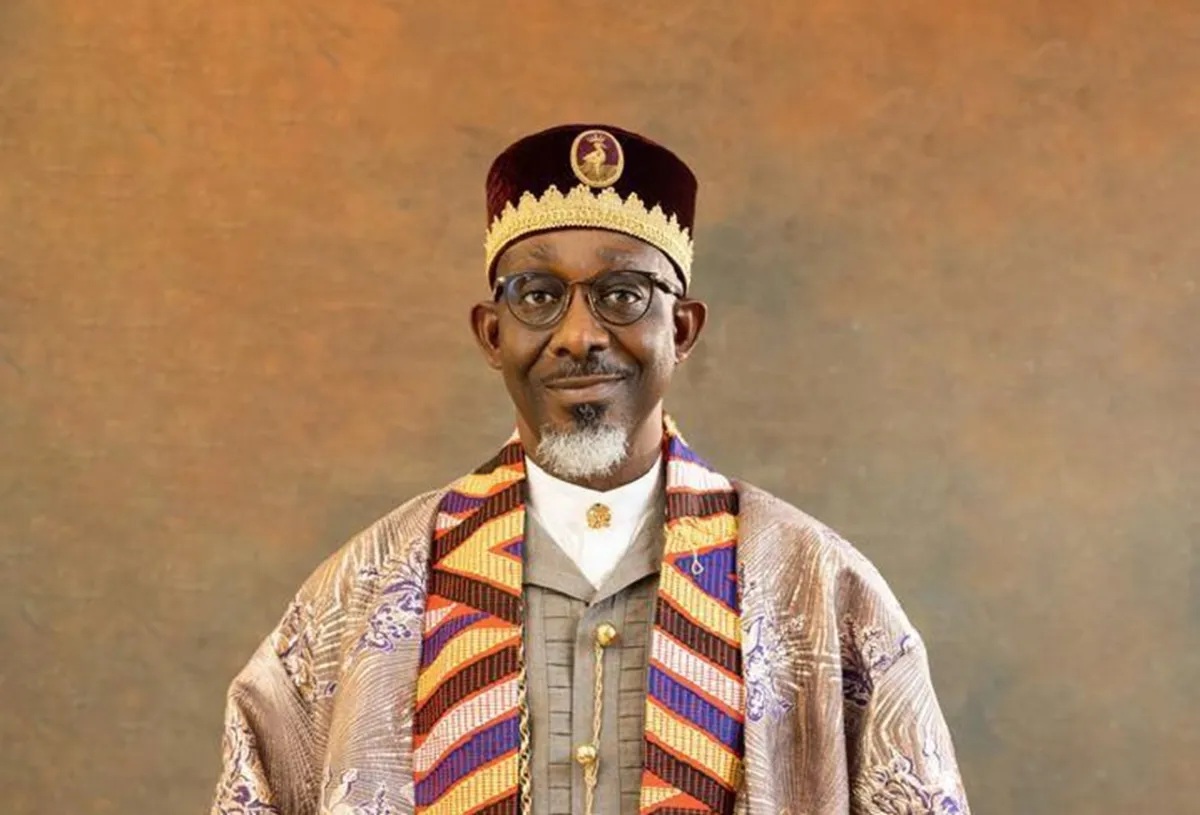
The leadership style of King Edward, the Amanayanbo of the Grand Bonny Kingdom, is drawing widespread admiration as the ancient kingdom witnesses a renewed wave of cultural pride, youth engagement, and economic revitalisation.

This renewed confidence was on full display today during the grand opening of a luxury five-star hotel in Bonny, an event marked by a colourful royal procession led by the King himself. Videos from the event show the Amanayanbo joyfully dancing as he made his entry — a moment many observers described as symbolic of a youthful, approachable, and people-centred monarch.

Speaking on the significance of the moment, Christopher Allison a member of Bonny Atlas , described King Edward as “a breath of fresh air”, noting that the monarch has consistently championed initiatives that place Bonny at the centre of tourism and youth development in Rivers State.

“Bonny has always been a tourism hub, but this year we decided to take it up a notch,” Allison B. said, referencing a renewed tourism drive aligned with the Blue Economy initiative spearheaded by the Local Government Chairman, alongside projects initiated by the Amanayanbo himself.

Among the notable developments unveiled in recent months are the opening of the Bonny Consulate Cinema, the commencement of Bonny FM radio station managed by Grafton, and the successful hosting of the Amanayanbo Cup — a football tournament that was aired on SuperSport and attracted international football scouts over a two-week period.

According to Christopher Allison, the tournament has already yielded tangible results, with about ten young Bonny athletes expected to travel to Greece next year to begin professional football careers.

“It’s immense,” he said. “A lot of young people are being captured by these initiatives. Real opportunities are opening up for the youths of Bonny.”

The momentum is expected to continue with the Bonny Kingdom Boat Regatta scheduled for the 26th, an event described as the crowning highlight of the Blue Economy tourism rollout. Organisers say the regatta will become an annual fixture, further strengthening Bonny’s visibility on national and international platforms.

Observers note that these developments reflect a broader shift in leadership philosophy — one that blends tradition with modern creativity, cultural heritage with economic ambition.

“For years, Bonny was in the shadows,” Christopher Allison added. “Now we are taking our destiny into our own hands, projecting our talents beyond our shores and making our own fortunes.”

As Bonny Kingdom continues to attract investments, media attention, and global exposure, many residents see the Amanayanbo’s hands-on, youth-focused approach as a defining factor in the kingdom’s ongoing transformation — one that positions Bonny not only as a custodian of history, but as a rising centre of culture, tourism, and opportunity.

In much of Africa, feminism is often perceived as an anathema. Patriarchy continues to dominate social, political, and economic structures, relegating women and keeping gender-related issues away from mainstream policy. This entrenched stance has restricted women’s roles and opportunities, despite decades of struggle and activism. Since the late 1980s, however, global human rights campaigns have increasingly brought women’s concerns to the fore. Today, women development refers to deliberate efforts to empower women—not only to shape their own destinies but also to actively participate in societal transformation.

Development and the Gender: Question Development is a multifaceted concept, encompassing welfare, stability, and growth. With women making up more than half of the world’s population, no development strategy can be considered complete without addressing gender disparities. Despite this, women in many developing countries remain structurally disadvantaged in education, health, employment, and political participation. The Beijing Conference of 1995 emphasized women’s inclusion as indispensable. This is particularly vital in areas such as peace and security: women are rarely perpetrators of violence but are disproportionately its victims—whether in armed conflict or domestic abuse. Research further shows that excluding women weakens family stability, increases poverty, and produces intergenerational disadvantages, both social and psychological.

Policy Gaps and Local Challenges: In countries like Nigeria, women face deeper vulnerabilities due to weak social security systems. Political and budgetary decisions—dominated by men— rarely prioritize women’s welfare. Education emerges as the most critical tool for empowerment. It enables women to make informed choices about family planning, participate in economic life, and engage politically. Without access to education, women remain disadvantaged in employment and leadership opportunities. The UN Sustainable Development Goals (SDGs) reinforce this global agenda, making gender equality central to sustainable progress. Yet, in many African societies, entrenched cultural norms continue to make women’s empowerment an uphill task.

Voices of Advocacy: Among the prominent champions of women’s rights is Marianne Racine Sow, a Senegalese activist who since 1989 has campaigned against Female Genital Mutilation (FGM) and promoted women’s sexual and social rights. Sow stresses the importance of involving men in dismantling harmful traditions. She argues that empowerment must extend beyond women themselves to engage entire communities in redefining gender roles. Her advocacy highlights training, public engagement, and dialogue platforms where women can voice their needs and aspirations. By framing empowerment as a collective process, Sow demonstrates that sustainable change depends on community-wide participation rather than isolated female advancement.

Conclusion: Women development is not a marginal concern—it is central to modern transformation. Empowered women drive family stability, economic growth, and peacebuilding. Excluding them from development processes risks instability and stagnation. To mainstream women’s empowerment is not merely a moral imperative; it is a practical foundation for sustainable progress. An empowered woman provides the fulcrum for a stable society, becoming both the driver of peace and the engine of development.

Dear Readers,

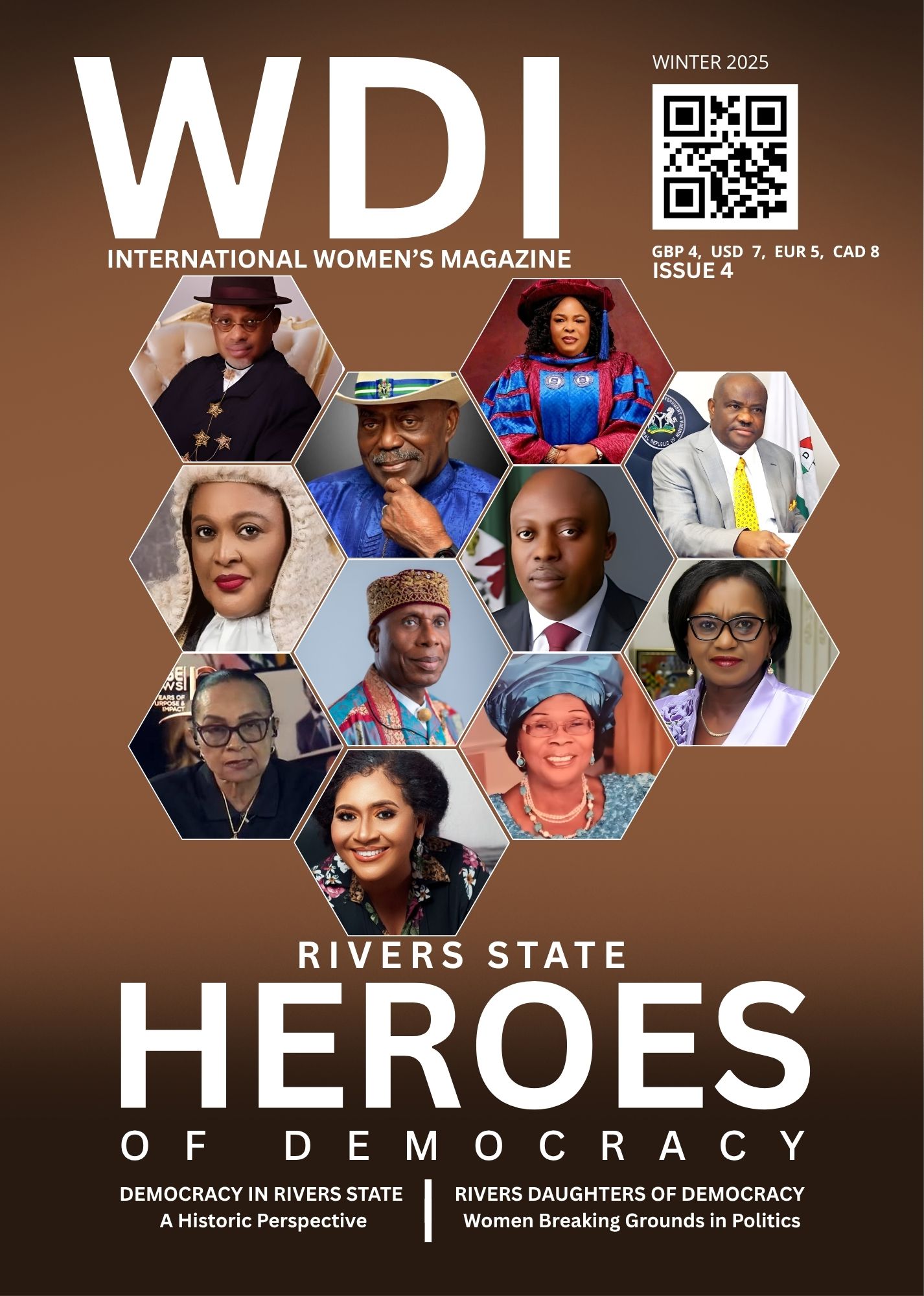
It is with great pride and purpose that I welcome you to this special edition of Women Development International, dedicated to celebrating the Heroes of Democracy in Rivers State. This edition is more than a collection of stories—it is a tribute to the women and men whose courage, leadership, and resilience have shaped the democratic journey of Rivers State.

From the ballot struggles of yesterday to the civic engagement of today, we spotlight those whose voices and actions continue to sustain freedom, inclusion, and justice. Our features traverse history, honour iconic leaders, amplify women’s rising influence, and capture the spirit of everyday citizens whose votes and voices uphold democracy.

We believe these stories are not just about Rivers State—they are mirrors of Nigeria’s broader democratic evolution. As you turn these pages, may you find inspiration in the sacrifices, wisdom, and vision of these heroes, and may their legacies stir each of us to strengthen democracy in our own spaces. With gratitude and hope,

Gloria Ken-Idehen

Editor-in-chief, WDI Magazine

Rivers State, located in the southern region of Nigeria, has a rich and complex political history. Since its creation in 1967, the state has witnessed the evolution of governance from military administrations to democratic rule. This chapter traces the historical development of democracy in Rivers State, highlighting the key political actors, electoral transitions, and the growing role of women in politics. By understanding the historical trajectory, one gains insight into the state’s contemporary democratic landscape and the
challenges and achievements that have shaped it.

The Birth of Rivers State (1967)
Formation and Early Leadership Transitions Rivers State was carved out of the Eastern Region on May 27, 1967, during General Yakubu Gowon’s military regime. The creation
was part of a broader effort to reorganize Nigeria into 12 states, aimed at addressing ethnic tensions and fostering political stability. The first administrator of Rivers State was Joseph Adeusi, followed by subsequent military administrator, whose tenure was characterized by centralized governance and limited public participation. The early leadership transitions in Rivers State laid the foundation for governance structures and highlighted the tensions between military directives and emerging local political aspirations. Key challenges included the integration of diverse ethnic groups, managing natural resources, particularly oil, and establishing administrative structures that could later support democratic governance.

Return to Civil Rule (1979 – 1999)
Governance Under Melford Okilo
The return to civilian rule in 1979 marked the beginning of the Second Republic in Nigeria. Rivers State experienced its first democratic governance with Melford Okilo as governor under the National Party of Nigeria (NPN). His administration focused on infrastructural
development, educational reforms, and creating institutions for local governance. However, the democratic experience was short-lived due to persistent political instability and military interventions.

Shift to Military Interludes
From 1983 to 1999, Rivers State oscillated between civilian and military rule. The military took over governance in response to perceived corruption and political mismanagement at both state and federal levels. During these interludes, military administrators wielded significant control over the political and economic affairs of the state, often side-lining participatory democracy. Nonetheless, these periods laid the groundwork for administrative
efficiency, particularly in resource management and governance centralization.

Democracy Post-1999: Rivers in the Fourth Republic
Democratic Stability and Electoral Integrity: A Decade-wise Analysis
The return to democracy in 1999 ushered in the Fourth Republic, with a renewed emphasis on electoral processes and democratic governance. Rivers State, as a resource-rich and
politically vibrant state, became a focal point of democratic consolidation. Key features include:

1999–2007: Dominance of the People’s Democratic Party (PDP).
Initial years focused on restoring governance structures, promoting infrastructural projects, and institutionalizing democratic practices.

2007–2015: Period marked by contested elections, electoral reforms, and challenges to
transparency. Political violence occasionally marred elections, highlighting the fragility of
democratic institutions.

2015–2023: Emergence of the All Progressives Congress (APC) alongside PDP has introduced competitive politics, with increasing focus on electoral monitoring, transparency,
and citizen participation.

Key Political Parties and Their Influence. The PDP has historically dominated Rivers State politics due to its organizational structure and grassroots influence. Conversely,
the APC, emerging in the 2010s, has challenged the PDP’s dominance, advocating for policy reforms, anti-corruption measures, and broader political representation. Other smaller parties, though less influential, have contributed to diversifying the political landscape and encouraging civic engagement.

The Role of Women in Rivers State’s Political Growth
Milestones in Female Political Participation

Women in Rivers State have played an increasingly significant role in democratic governance. Initially marginalized, women gradually entered political arenas as candidates, party leaders, and policy advocates. Key milestones include:

1979–1999: Limited female representation in local councils and political appointments.

Post-1999: Increased participation, with women occupying legislative seats, executive appointments, and leadership roles within major political parties. Establishment of advocacy groups promoting gender equality and leadership training for women.

Recent elections have seen more women elected into office, influencing policymaking, particularly on issues of education, healthcare, and social welfare.

Conclusion
Democracy in Rivers State has undergone a complex evolution from its formation in 1967, through periods of civilian governance and military intervention, to the consolidation of the Fourth Republic. The state’s political history highlights the interplay between resource
management, electoral processes, party politics, and civic engagement.

Women’s growing participation underscores the transformative potential of inclusive governance.
Understanding these historical dynamics provides a foundation for evaluating contemporary democratic practices and anticipating future political developments in Rivers State

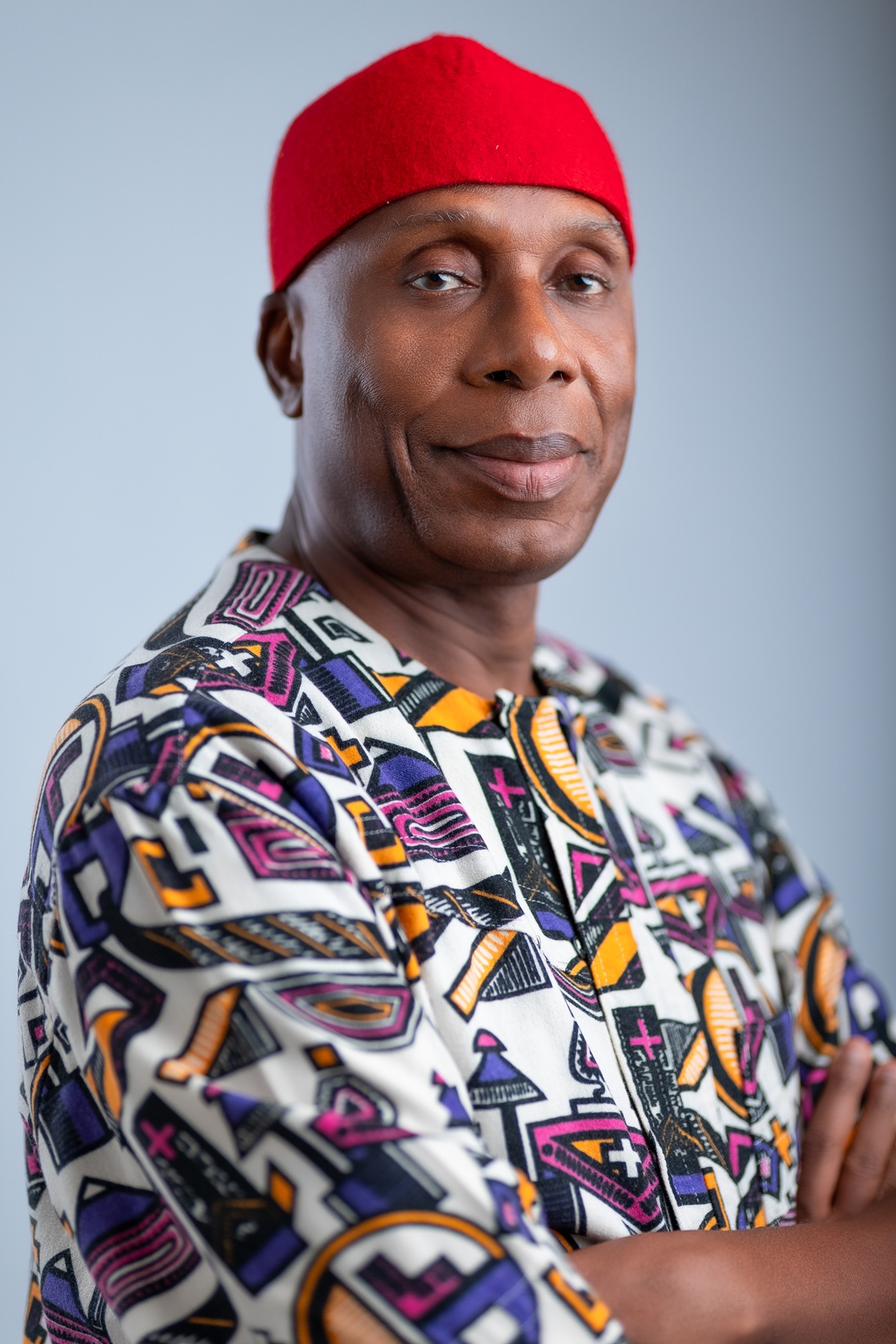
Security Statement Amaechi

IMMEDIATE RELEASE

DATE: November 19, 2025

It is clear that the government in power has no political will to curb the incessant killings and terrorist attacks plaguing our country today. The government has failed to provide adequate protection for its citizens, as evidenced by the surge in terrorist attacks and mass kidnappings in some parts of the country – challenging our national security. This failure to act decisively has sadly emboldened terrorists and eroded public trust.

The incessant attacks on innocent citizens in Plateau; the reported attack and kidnapping of secondary schoolgirls in Kebbi; an ambush on soldiers in Borno resulting in the abduction and killing of a Brigadier General, M. Uba; the attack on a church in Kwara; and the kidnapping of a priest, Rev. Fr. Bobbo Paschal, in Kaduna –all within a week – are too much to be ignored.

The Federal Government needs to step up its game, sharpen its response to terrorist activities, strengthen military intelligence and tactical operations, and live up to the expectations of its people.

To Mr. President: your primary assignment is the security of lives and property. Enough of looking the other way or issuing watery statements of condemnation. Prioritizing a summit or jetting out for whatever reason when Nigerians are dying can never be the trait of a good leader. It is time to probe wrong decisions, strategize, and make tough calls. The current situation calls for decisive leadership, stronger intelligence coordination, and accountability.

We did it in Rivers State; it can be done in the country. We are prepared to help if you request help.

Rt Hon. Chibuike Rotimi Amaechi