
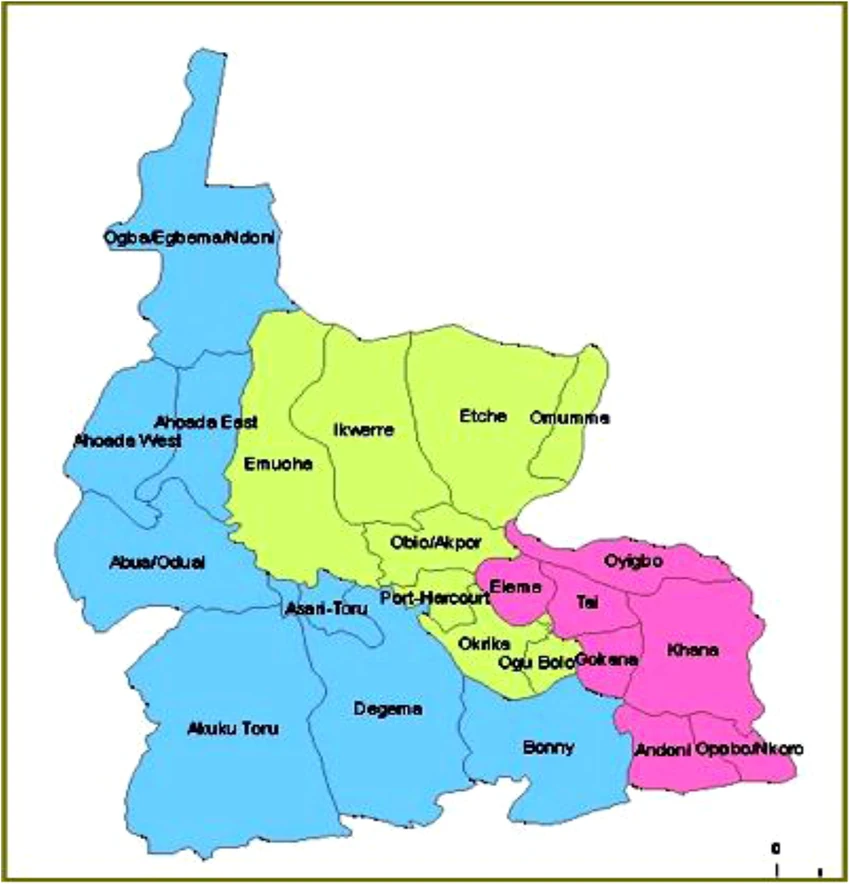
Rivers State, located in the southern region of Nigeria, has a rich and complex political history. Since its creation in 1967, the state has witnessed the evolution of governance from military administrations to democratic rule. This chapter traces the historical development of democracy in Rivers State, highlighting the key political actors, electoral transitions, and the growing role of women in politics. By understanding the historical trajectory, one gains insight into the state’s contemporary democratic landscape and the
challenges and achievements that have shaped it.
The Birth of Rivers State (1967)
Formation and Early Leadership Transitions Rivers State was carved out of the Eastern Region on May 27, 1967, during General Yakubu Gowon’s military regime. The creation
was part of a broader effort to reorganize Nigeria into 12 states, aimed at addressing ethnic tensions and fostering political stability. The first administrator of Rivers State was Joseph Adeusi, followed by subsequent military administrator, whose tenure was characterized by centralized governance and limited public participation. The early leadership transitions in Rivers State laid the foundation for governance structures and highlighted the tensions between military directives and emerging local political aspirations. Key challenges included the integration of diverse ethnic groups, managing natural resources, particularly oil, and establishing administrative structures that could later support democratic governance.
Return to Civil Rule (1979 – 1999)
Governance Under Melford Okilo
The return to civilian rule in 1979 marked the beginning of the Second Republic in Nigeria. Rivers State experienced its first democratic governance with Melford Okilo as governor under the National Party of Nigeria (NPN). His administration focused on infrastructural
development, educational reforms, and creating institutions for local governance. However, the democratic experience was short-lived due to persistent political instability and military interventions.
Shift to Military Interludes
From 1983 to 1999, Rivers State oscillated between civilian and military rule. The military took over governance in response to perceived corruption and political mismanagement at both state and federal levels. During these interludes, military administrators wielded significant control over the political and economic affairs of the state, often side-lining participatory democracy. Nonetheless, these periods laid the groundwork for administrative
efficiency, particularly in resource management and governance centralization.
Democracy Post-1999: Rivers in the Fourth Republic
Democratic Stability and Electoral Integrity: A Decade-wise Analysis
The return to democracy in 1999 ushered in the Fourth Republic, with a renewed emphasis on electoral processes and democratic governance. Rivers State, as a resource-rich and
politically vibrant state, became a focal point of democratic consolidation. Key features include:
1999–2007: Dominance of the People’s Democratic Party (PDP).
Initial years focused on restoring governance structures, promoting infrastructural projects, and institutionalizing democratic practices.
2007–2015: Period marked by contested elections, electoral reforms, and challenges to
transparency. Political violence occasionally marred elections, highlighting the fragility of
democratic institutions.
2015–2023: Emergence of the All Progressives Congress (APC) alongside PDP has introduced competitive politics, with increasing focus on electoral monitoring, transparency,
and citizen participation.
Key Political Parties and Their Influence. The PDP has historically dominated Rivers State politics due to its organizational structure and grassroots influence. Conversely,
the APC, emerging in the 2010s, has challenged the PDP’s dominance, advocating for policy reforms, anti-corruption measures, and broader political representation. Other smaller parties, though less influential, have contributed to diversifying the political landscape and encouraging civic engagement.
The Role of Women in Rivers State’s Political Growth
Milestones in Female Political Participation
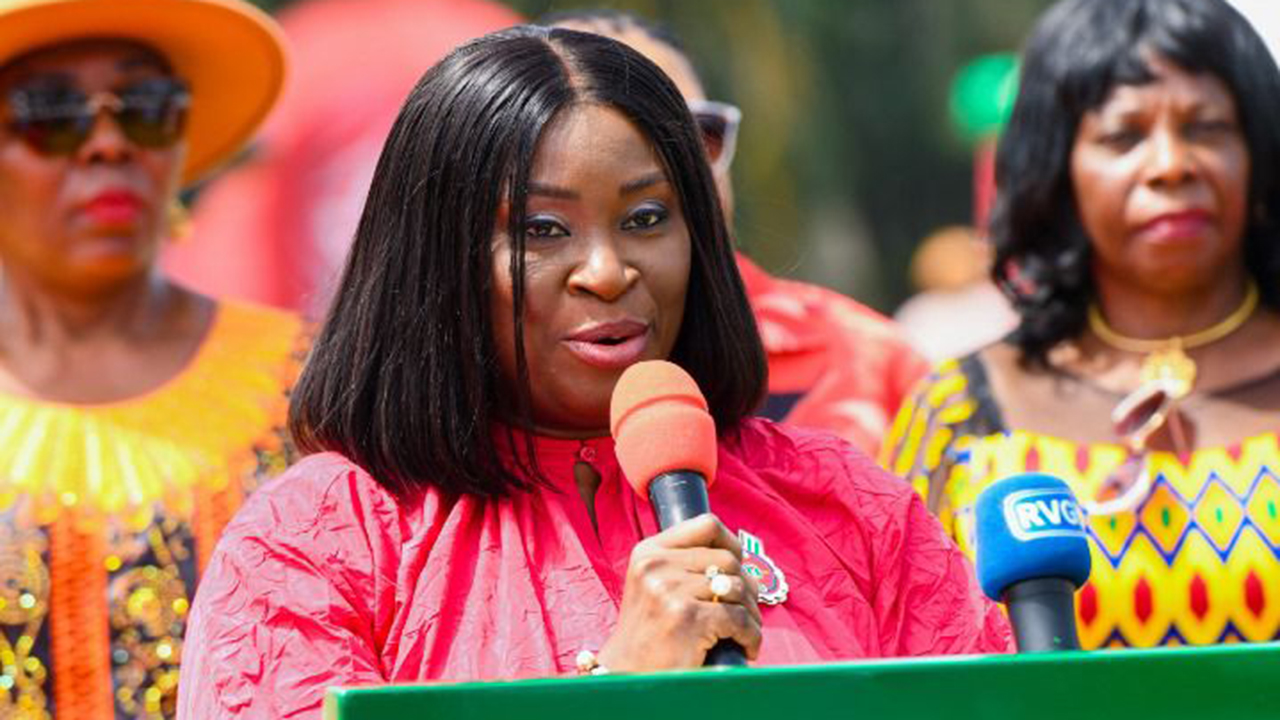
Women in Rivers State have played an increasingly significant role in democratic governance. Initially marginalized, women gradually entered political arenas as candidates, party leaders, and policy advocates. Key milestones include:
1979–1999: Limited female representation in local councils and political appointments.
Post-1999: Increased participation, with women occupying legislative seats, executive appointments, and leadership roles within major political parties. Establishment of advocacy groups promoting gender equality and leadership training for women.
Recent elections have seen more women elected into office, influencing policymaking, particularly on issues of education, healthcare, and social welfare.
Conclusion
Democracy in Rivers State has undergone a complex evolution from its formation in 1967, through periods of civilian governance and military intervention, to the consolidation of the Fourth Republic. The state’s political history highlights the interplay between resource
management, electoral processes, party politics, and civic engagement.
Women’s growing participation underscores the transformative potential of inclusive governance.
Understanding these historical dynamics provides a foundation for evaluating contemporary democratic practices and anticipating future political developments in Rivers State




Comments are closed.